

YEIDA Building By-Laws
YEIDA Building By-Laws for Residential Plots: FAR, Height & Coverage (2026 Updated Guide)
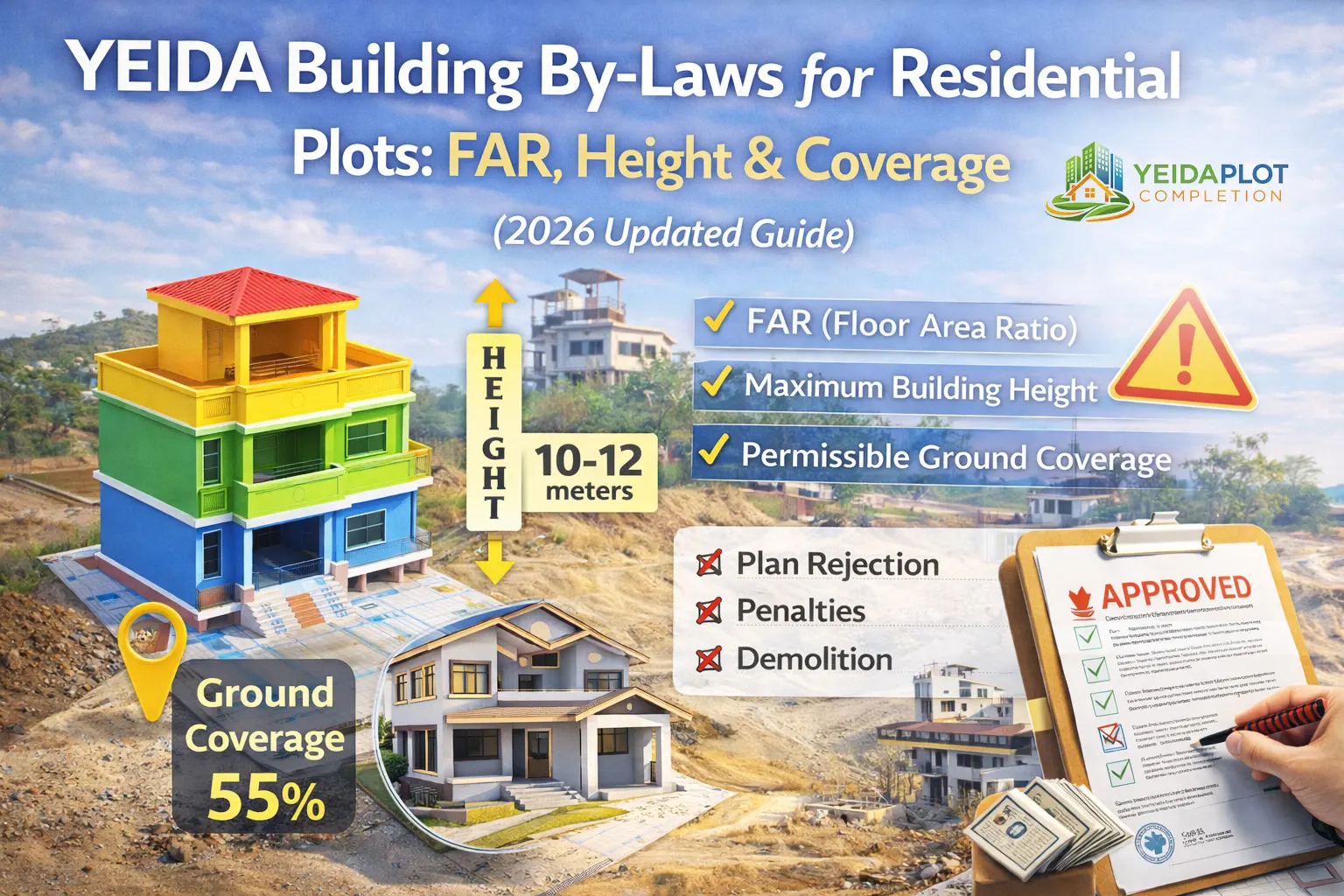
If you are planning to construct a house on a YEIDA residential plot, understanding the YEIDA building by-laws is non-negotiable. These by-laws clearly define how much you can build, how high you can build, and how much area you can cover on your plot.
Many plot owners face rejection of building plans or delays in completion certificates simply because they ignore or misunderstand FAR, ground coverage, and height rules.
This blog explains YEIDA building by-laws in simple language, so you can plan your construction correctly and avoid penalties.
Why YEIDA Building By-Laws Matter
YEIDA follows strict planning norms to maintain:
Uniform development
Proper ventilation & safety
Infrastructure load balance
Legal construction standards
Any construction that violates YEIDA by-laws may result in:
❌ Plan rejection
❌ Stop-work notice
❌ Penalties or demolition
❌ Delay in completion certificate
Understanding FAR (Floor Area Ratio) in YEIDA
What Is FAR?
FAR (Floor Area Ratio) defines the total construction area allowed on your plot.
Formula:
FAR = Total Built-Up Area ÷ Plot Area
YEIDA FAR for Residential Plots (General Guideline)
Plot Size
Permissible FAR
Up to 200 sq. mtr.
1.20 – 1.50
200–300 sq. mtr.
1.50
300–500 sq. mtr.
1.50 – 1.75
Above 500 sq. mtr.
As per scheme
👉 Exact FAR may vary based on:
Sector
Scheme
Road width
Corner plot benefits
What Counts in FAR?
✔ Covered rooms
✔ Staircase
✔ Internal walls
✔ Upper floors
❌ Open balconies (as per norms)
❌ Open terrace
❌ Basement (in some cases)
Ground Coverage Rules in YEIDA
What Is Ground Coverage?
Ground coverage is the percentage of plot area covered at ground level.
Typical Ground Coverage Limits
Plot Size
Ground Coverage
Small plots
60%
Medium plots
55%
Large plots
50%
This ensures:
✔ Open space
✔ Natural light
✔ Proper drainage
Over-covering your plot can result in plan rejection.
Maximum Building Height Allowed in YEIDA
Standard Height Norms
Generally up to 10–12 meters
Usually G+1 or G+2 floors allowed
Height depends on:
Road width
FAR utilization
Fire safety norms
Basement Rules
Basement permitted only for:
Parking
Storage
Not allowed for residential use
Requires special approval
Setback Rules for YEIDA Residential Plots
Setbacks define the minimum open space required around the building.
Typical setbacks include:
Front setback
Side setback
Rear setback
These vary based on:
Plot size
Road width
Corner or normal plot
Ignoring setbacks is one of the most common violations in YEIDA.
Corner Plot Benefits in YEIDA
If you own a corner plot:
✔ Slightly higher FAR
✔ Better ventilation
✔ Additional setback flexibility
But approval is still mandatory.
Importance of Building Plan Approval
Before starting construction, you must obtain:
YEIDA building plan approval
Structural safety approval
Construction without approval can lead to:
❌ Heavy penalties
❌ Demolition
❌ Delay in completion certificate
Learn more about our YEIDA plot completion support here:
👉 https://yeidaplotcompletion.com/yeida-residential-plot-completion-service
How Building By-Laws Affect Completion Certificate
YEIDA issues a Completion Certificate only if:
✔ FAR is within limits
✔ Height is compliant
✔ Ground coverage is correct
✔ Setbacks are maintained
Any deviation can result in inspection failure.
Common Mistakes Plot Owners Make
❌ Assuming FAR is same for all plots
❌ Ignoring setbacks to gain space
❌ Building extra floor without approval
❌ Misusing basement
❌ Hiring contractors unfamiliar with YEIDA rules
These mistakes often cost more than planned construction savings.
Why Hire a YEIDA-Focused Construction Partner
A YEIDA-experienced team helps you:
Design within FAR limits
Optimize space legally
Get faster approvals
Avoid rework and penalties
Know more about us here:
👉 https://yeidaplotcompletion.com/about-us
Frequently Asked Questions (FAQs)
Q1. Can FAR be increased in YEIDA residential plots?
In some cases, yes — based on scheme rules or paid FAR, but approval is mandatory.
Q2. Is G+2 allowed in YEIDA?
Yes, subject to plot size, FAR, and height norms.
Q3. Does staircase count in FAR?
Yes, internal staircases are counted in FAR.
Q4. Is basement counted in FAR?
Generally no, but it must comply with usage norms.
Q5. Can YEIDA reject my plan if I exceed coverage?
Yes. Excess ground coverage is a valid reason for rejection.
Final Words
Understanding YEIDA building by-laws for residential plots — especially FAR, height, and ground coverage — is the foundation of safe, legal, and stress-free construction.
Plan smart, build legally, and protect your investment.
For professional guidance or construction support, feel free to connect with us:
👉 Contact Us:
https://yeidaplotcompletion.com/contact-us